
It isn’t often that you get immunologists, engineers, and clinicians in the same room to talk openly about the gaps in our understanding of biology. But on April 19, at MIT’s Hormone-Immunity Nexus Workshop, hosted by the Center for Gynepathology Research (CGR) and the Safety Health Environmental Discovery (SHED) Lab, that is exactly what happened.
CGR and SHED both serve as a collaborative hub for developing next-generation human-relevant research platforms that integrate engineering and biology—making it a natural anchor for the cross-disciplinary work highlighted throughout the workshop.
At a Glance: Key Takeaways
- Bridging the Gap: The workshop convened a global, multidisciplinary panel of immunologists, engineers, and clinicians to address long-standing gaps in biological understanding.
- Human-Relevant Models: Experts showcased how 3D living tissue models and AI-assisted imaging—known as New Approach Methodologies (NAMs)—are surpassing traditional animal models in capturing human hormonal and immune variability.
- Scaling Precision: Discussions focused on integrating longitudinal patient data with computational profiling to achieve the “holy grail” of medicine: real-time, personalized health insights.
- Collective Action: Leadership from CGR and SHED emphasized the need for ongoing working groups to tackle complex, spectrum diseases like Chronic Lyme and Long COVID that have historically lacked collective focus.
The Heart of the Workshop: “Stata Street”
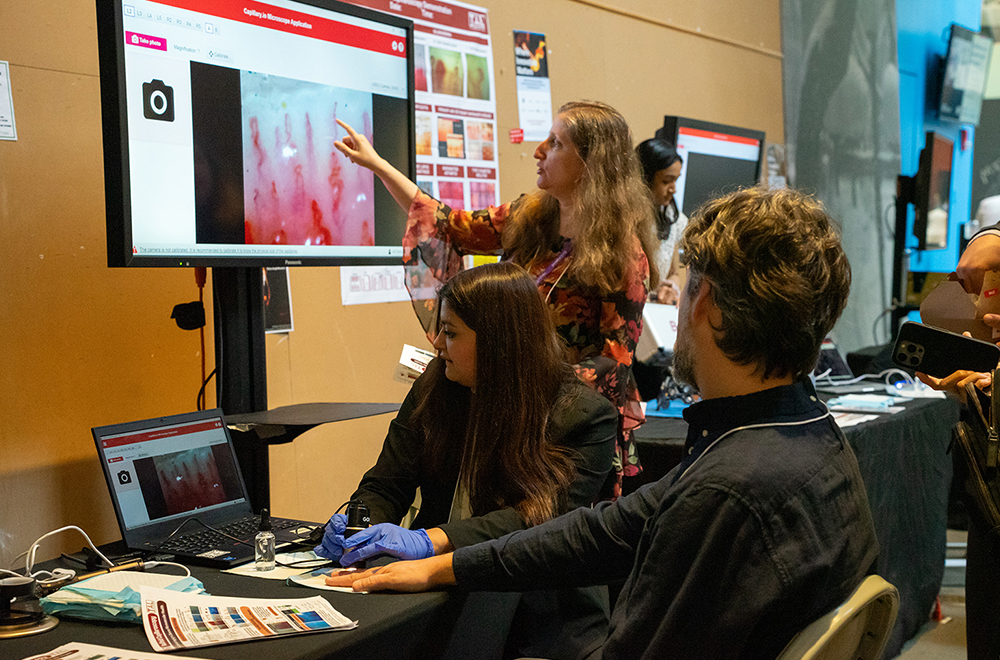
Beyond the scheduled presentations and eleven research posters, the heart of the workshop pulsed through conversations on “Stata Street”. There, discussions moved fluidly from data points to the bigger picture: how New Approach Methodologies (NAMs) are offering a new kind of hope for the future of personalized patient care.
Session 1: Engineering the Future of Immunology
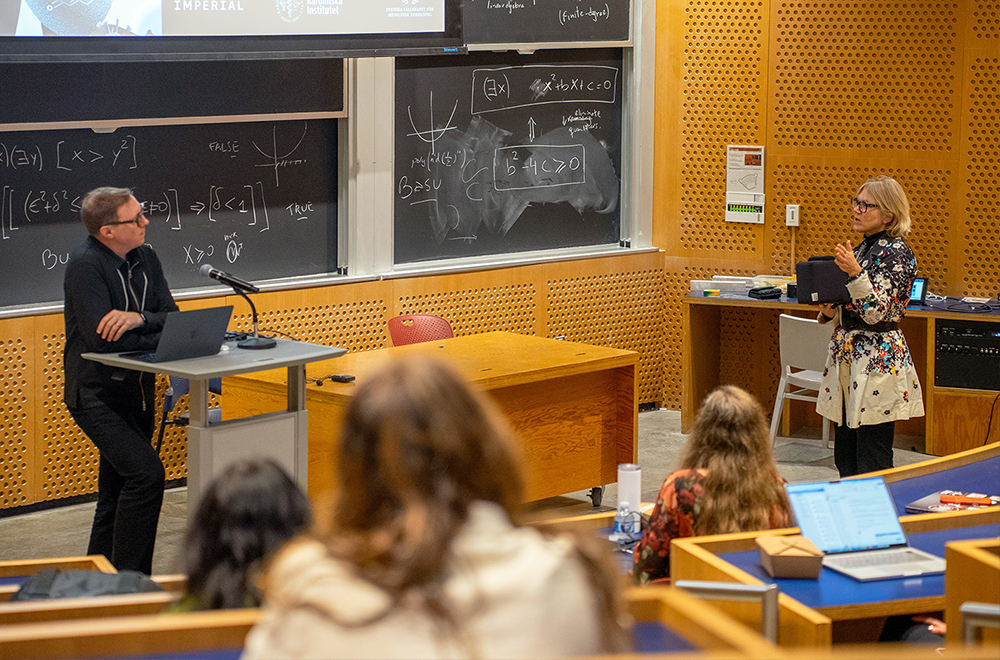
The opening session brought together a multidisciplinary panel:
- CGR Director Linda Griffith on engineering innovations
- Systems Biologist Douglas Lauffenburger on signaling analysis
- Imaging Scientist Sixian You on metabolic microscopy
- Pediatric Immunologist Petter Brodin on early-life immunity
Together, they demonstrated how 3D living tissue models and advanced AI-assisted imaging are moving beyond traditional limitations, allowing researchers to visualize multicellular dynamics with unprecedented clarity. Panelists emphasized that these systems are not just more complex models, but more human-relevant ones—capable of capturing hormonal variability, immune signaling, and tissue-specific responses in ways animal models often cannot.
In the Q&A, discussion turned to one of the field’s central tensions: how to balance model complexity with usability. Lauffenburger noted that “the goal isn’t to recreate the entire human, but to identify the minimal systems that still give predictive power,” while Griffith highlighted the importance of modular platforms that can evolve alongside new biological insights.
Session 2: Scaling Precision and Complexity
The afternoon session extended the workshop’s reach with presentations from Caroline Sokol, Bryan Bryson, Purvesh Khatri, and Douglas Brubaker. Their work bridged computational immune profiling and mucosal immunology, exploring how hormonal signals influence responses ranging from acute infection to chronic disease.
Several speakers underscored the importance of integrating longitudinal patient data with experimental systems. Khatri emphasized that variability across patients is not noise, but signal—particularly when studying hormone-linked immune responses. Bryson added that machine learning models are only as powerful as the biological questions guiding them, reinforcing the need for close collaboration between computational and experimental teams.
These sessions culminated in a spirited Q&A that pushed beyond the technical slides to address the ultimate goal—the “holy grail” of medicine: real-time, personalized health insights. One recurring question from the audience centered on clinical translation: how quickly these NAMs platforms could move from lab validation to patient impact. Speakers acknowledged regulatory and scaling challenges but pointed to growing alignment between academia, industry, and regulatory bodies, and emphasized that workshops like the one hosted by MIT through CGR and SHED were leading the way towards that alignment.
These open exchanges were a defining feature of the workshop.
A Glimpse into the Next Generation
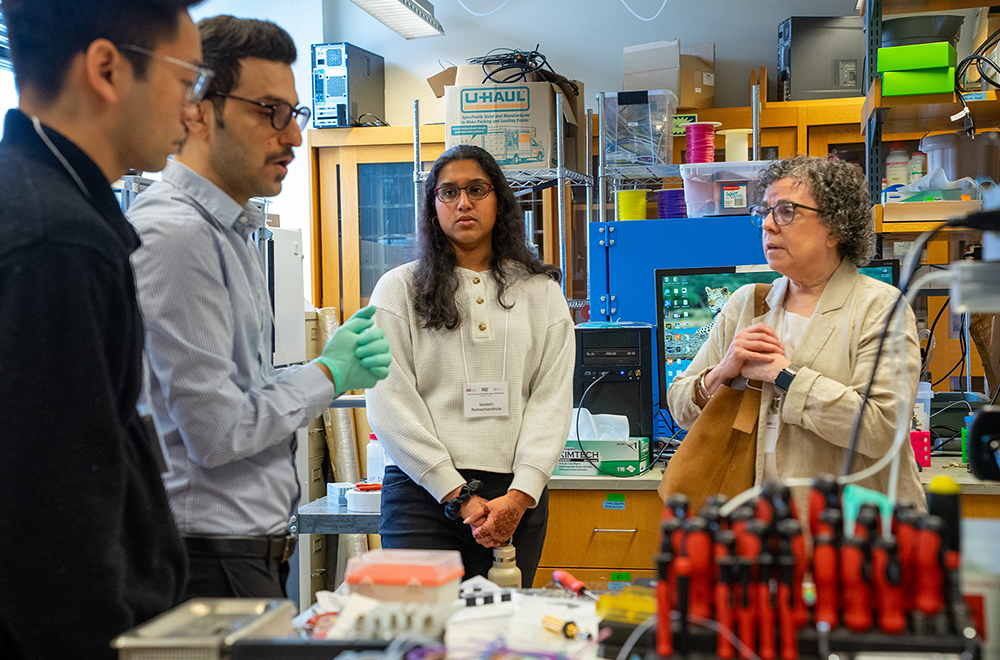
In the Poster Hall, post-doctoral researchers showcased a striking breadth of work, including T cell receptor mapping, the hormone-brain axis, Lyme disease and the female reproductive tract, and microphysiological systems engineering.
Dr. Anne Maitland, Medical Director for the Ehlers Danlos Syndrome Institute (EDSI), captured the atmosphere: “It’s so exciting to see the technologies that people have been furthering and the integration at all levels of microfabrication, the use of AI tools, and the old mix we have available. Getting these people together is really igniting.”
Dr. Caroline Sokol (Ragon Institute) echoed this excitement, noting that these engineering breakthroughs are “on the doorstep” of clinical application. She highlighted her conversation with Sixian You as an example of how cross-disciplinary exchange can accelerate progress in complex conditions like endometriosis and Lyme disease.
Read the abstracts for all eleven posters.
The Case for Collective Action
To close the workshop, attendees carried the momentum from the sessions and poster hall into dinner discussions, forming small groups to tackle systemic challenges at the intersection of their fields.
Mady Hornig, a neuroimmunologist, shared her group’s reflections:
“That’s where the NAMs are coming out—where patients are recording their clinical symptoms alongside autonomic nervous system testing and other functional data that can really pull all this together. As we identify key genes, we can better focus these approaches.”
The discussion took a lively turn as Dr. Maitland revisited the necessity of multidisciplinary collaboration for patients with complex chronic illnesses. While coordinated care is standard for conditions like cancer or heart failure, diseases such as Post-SARS COVID-19 or Lyme disease often lack that same collective focus.
“Because it’s such a spectrum of disease,” she noted, “people don’t want to touch it.”
The groups agreed that “not touching it” is not a solution.
Mikki Tal, a principal scientist in MIT’s Department of Biological Engineering, underscored the importance of sustaining this momentum through an ongoing working group—one that leverages emerging human-system tools to unlock new pathways toward precision medicine.
This vision aligns with SHED’s broader mission to serve as a convening space for precisely this kind of sustained, cross-disciplinary collaboration. As SHED founding director Dr. Tolga Durak has noted, “The future of discovery depends on building adaptable platforms and engineered systems that allow different disciplines to solve problems together.”
The Hormone-Immunity Nexus Workshop reflected both the momentum and urgency of this area of science. By connecting advances in engineering, computation, and clinical science, and by leveraging collaborative ecosystems like CGR and SHED, the workshop pointed toward a more integrated future for biomedical research.
Stay connected with CGR to learn about future workshops, seminars, and events. To sign up for our mailing list, visit cgr.mit.edu.