
Making the Invisible Visible
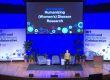
Dr. Michal Tal addressed HHS Secretary Kennedy and key stakeholders on the critical need for Systems Medicine and Novel Alternative Methods (NAMs) to diagnose and treat infection-associated chronic illnesses.
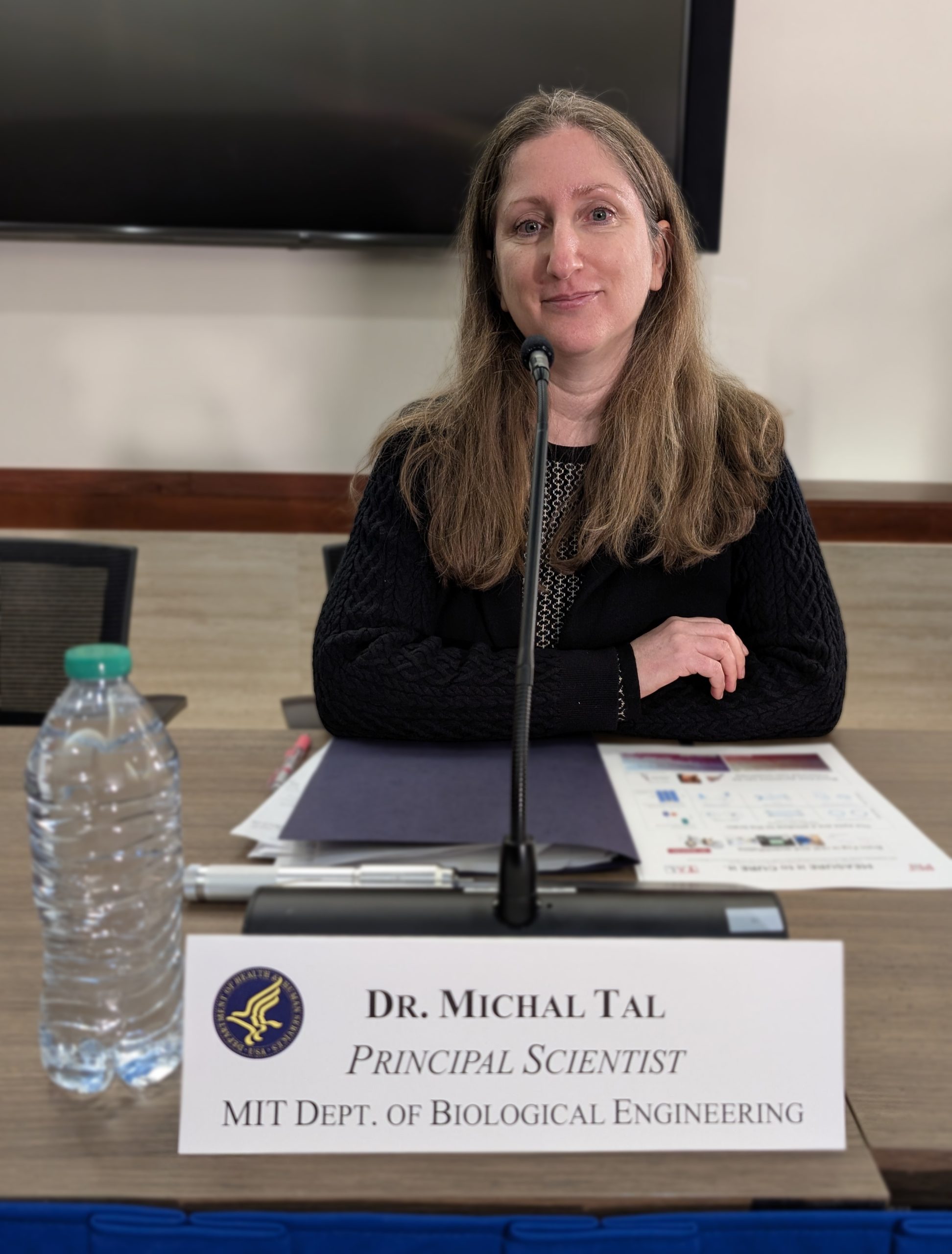
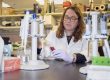
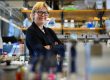
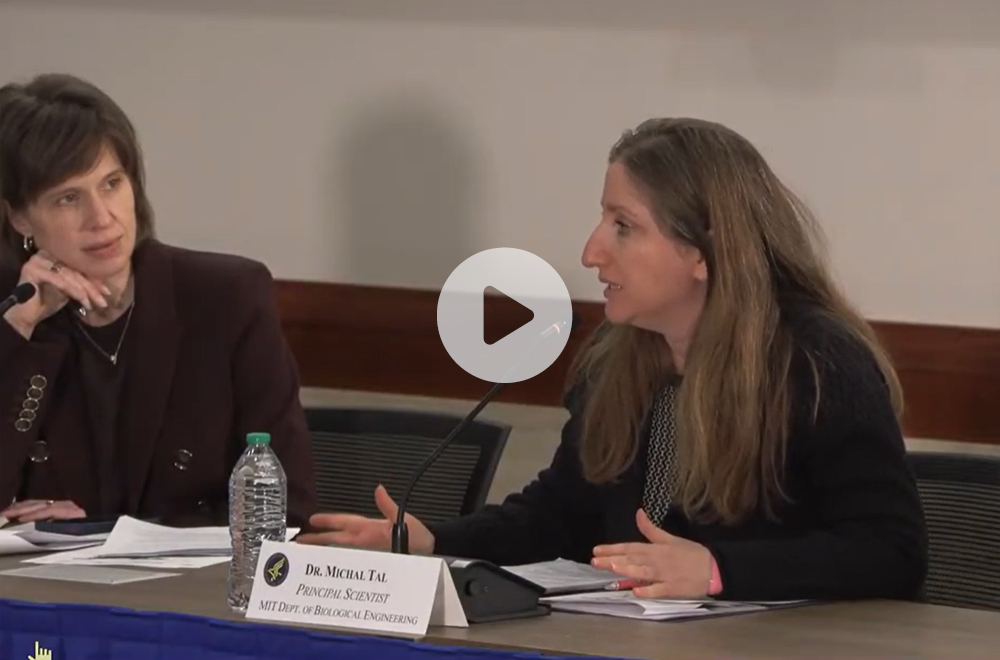
On Dec. 15, Michal (Mikki) Tal, an immuno-engineer at MIT’s Center for Gynepathology Research, was invited to the U.S. Department of Health and Human Services (HHS) for a high-level roundtable discussion on Lyme disease. The event, which included Secretary Robert F. Kennedy Jr., Senator Susan Collins, and leadership from the NIH and ARPA-H, focused on addressing critical gaps in federal support and diagnostic capabilities for tick-borne chronic illnesses.
Representing the “Innovators” panel, Dr. Tal shared how MIT is shifting the paradigm of chronic Lyme from a subjective syndrome to a solvable engineering problem. Through the MIT MAESTRO study—the Institute’s largest clinical study—researchers are utilizing high-dimensional data (over a million data points per person) to identify objective biomarkers. By measuring features like microvasculature blood flow and neurological voltage, the team aims to classify and track disease severity with hard numbers.
“The reason chronic Lyme is an ‘invisible illness’ is because we don’t have the tests to measure it,” Tal noted during the session. “At MIT, we are rooted in engineering. We are looking at this as a set of solvable problems.”
Executive Summary
At the HHS Roundtable, Dr. Tal emphasized that chronic Lyme is “invisible” largely because current medical technology fails to measure the biological reality of the patients.
TRANSCRIPT:
“I’m Mikki Tal, I’m an immuno-engineer at MIT, and I’ve been working on infectious disease immunology over the last 20 years.
The reason that chronic Lyme is an ‘invisible illness’ is because we don’t have the tests to measure it. People are often told they are fine while their bodies are breaking down. And I think one of the real tragedies is that we wait for their bodies to break down before we really try to step in and help.
Some of the big innovations we need involve being able to measure exactly what is happening and we have to be able to measure it to see what trajectory a patient is on. Is your illness on track to recover, or is it on track toward a catastrophic breakdown of the body?
At MIT, we are rooted in engineering. Rather than looking at this as a mysterious syndrome, we are looking at this as a set of problems, solvable problems. I lead a clinical study at MIT. It’s actually MIT’s largest clinical study, called MIT MAESTRO. I’ve left a handout on the back table as well as I’ve given each of you guys to show you some of these features that we can measure.
We perform thousands of tests and have over a million data points per participant. We are looking at hundreds of people who have gotten Long COVID or chronic Lyme, or acute Lyme to see if they are on track to recover or not, comparing them to recovered controls.
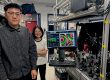
These diseases are complex. Clinicians can’t easily ask patients: ‘Is your connective tissue damaged? Is your connective tissue recovering? Is your blood-brain barrier integrity compromised? Are you getting enough blood flow to your brain?’ These are things that we can and should be measuring so that we can really understand the different impact. Just an example this is capillaroscope. You can look at blood flowing through your smallest microvasculature, your capillaries. There are all sorts of wearables and trackers available to look at blood flow, eye tracking, or brain voltage through EEG. We have ways to measure and put hard numbers on features of neurological dysfunction; we don’t need to say that ‘brain fog’ is a subjective symptom that we don’t have a way to measure. We do have ways to measure neurological dysfunction and we need to be doing that!
In MAESTRO, our concept is ‘measure ABSOLUTELY everything’ and the reason we’re doing that is so we can identify the tests that are most impactful to move forward with. While we’re not done yet, I want to tell you that I think at least measuring blood flow and eye tracking in neurological dysfunction are really critical and important.
The other think I want to mention is that instead of asking the immune system a yes/no question—’Have you ever seen this bug before?’—we are trying to look at the features of the immune response to ask it an open-ended question: ‘How did you respond?’ Was it in a way that was protective, and you’re clearing this infection? You’re never going to think about this again. Or was it in a way that was catastrophic, bring the house down? Those are really important to identify, because then maybe we could help people before all of the ongoing damage and suffering.
I really want to thank you for your invitation today, and for this open discussion.
[Response to Secretary Kennedy regarding HHS support]: I am surrounded by colleagues who are trying to build tools that could really change this. Some Novel Alternative Methods, (NAMs), such as ‘humans-on-a-chip’ [pioneered by Linda Griffith], as well as developing new computational methods to really do systems medicine [pioneered by Doug Lauffenburger]. There’s so much happening, and with AI developing as it is. I think one of the things that we really need is there’s still data that doesn’t yet exist in the way that we need it to exist in order to deeply analyze it. And, you know, the funding mechanisms that exist today aren’t in a way that really allow us to develop these tools that we need and to collect the data the way that we need to have it. I think that having funding structures that allow for these really critical developments that could leap us forward would be incredible.”